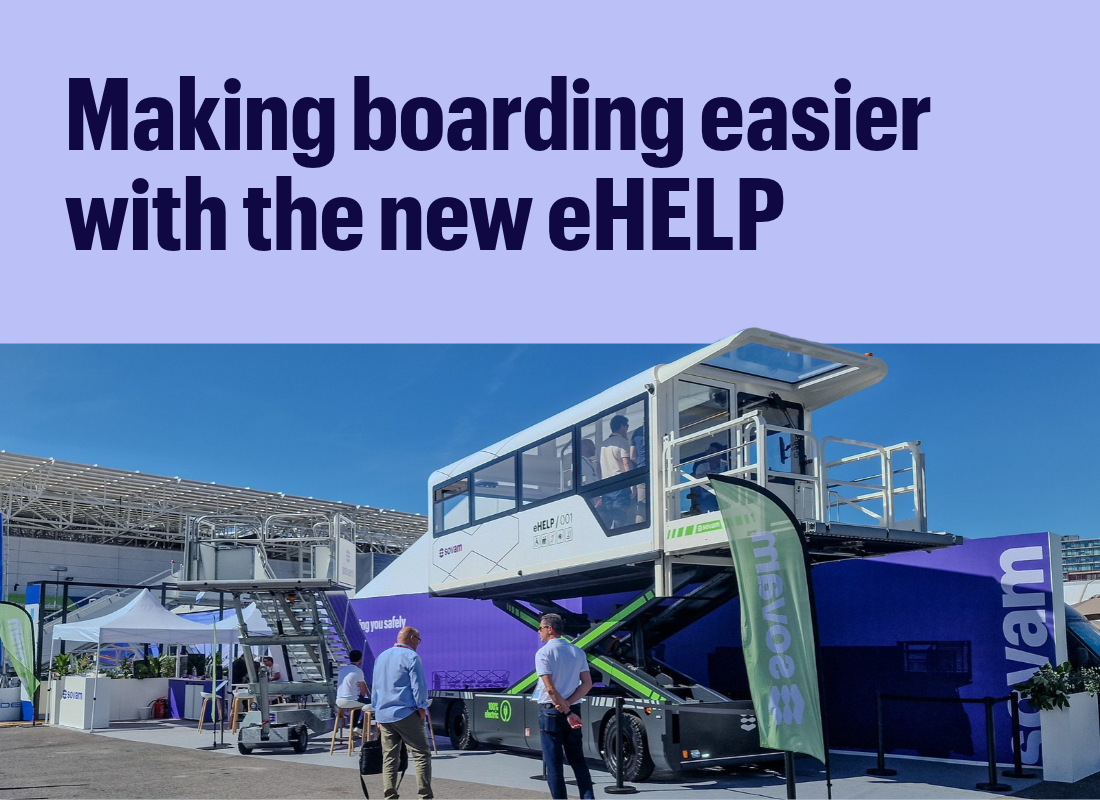
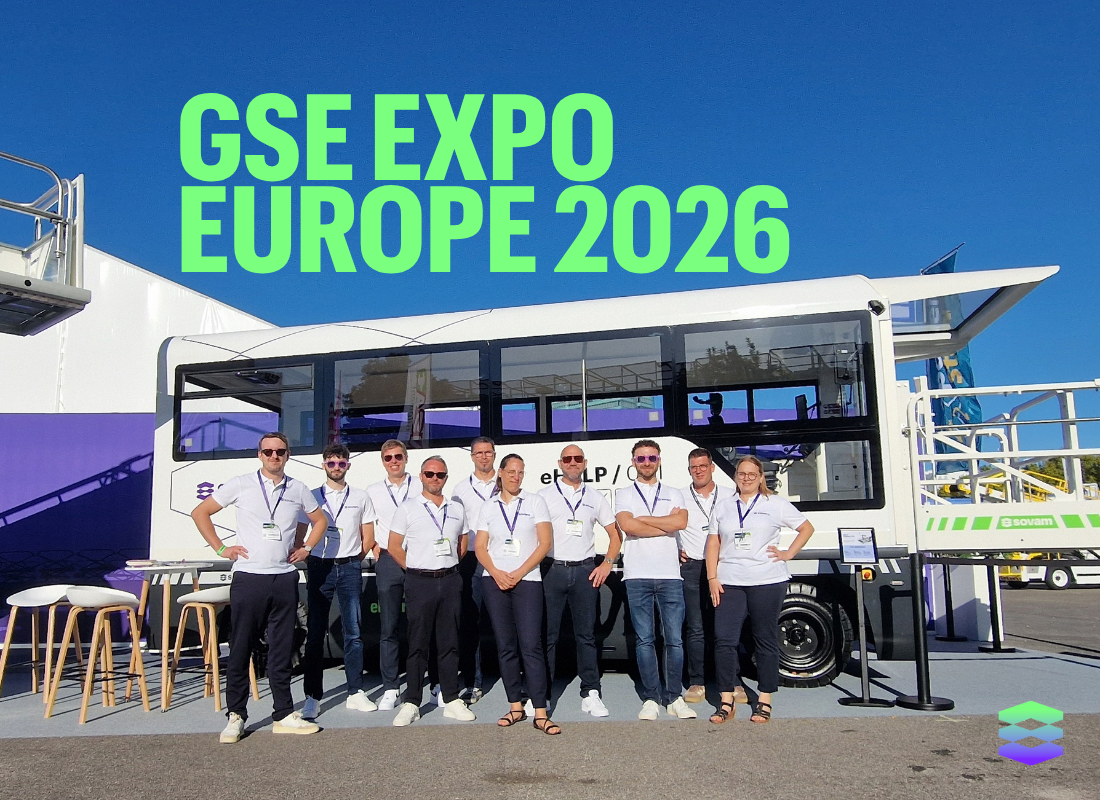
eHELP: With over 45 years of experience in the ambulift industry
The eHELP is new. The expertise behind it is not. SOVAM has been building ambulifts since 1979. Four generations have rolled off the same production line near Parthenay, in the Deux-Sèvres department. Each has transported passengers with limited mobility from the tarmac to the aircraft door. The eHELP is the fourth. Same business. Same team. Now 100% electric.
What an ambulift does
An Ambulift transports passengers with reduced mobility (PRM) between the terminal and the aircraft. The cabin is enclosed. It rises to the aircraft door threshold. Passengers board at ground level, sheltered from the weather and traffic on the tarmac.
The principle seems simple. Doing it right, however, is not. The cabin must dock with precision, hold its load smoothly, and operate every day for years on end. This is the standard that SOVAM has been refining for more than four decades.
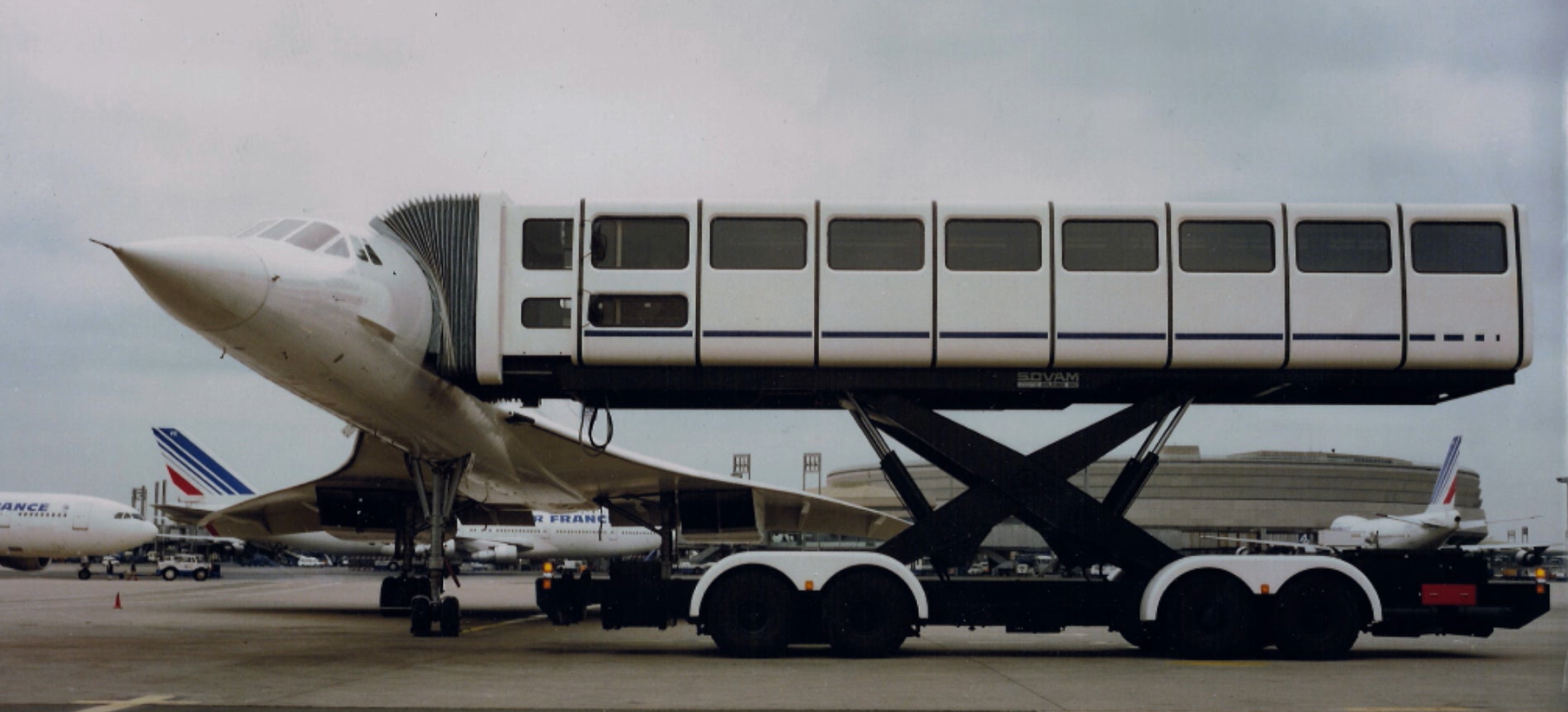
1970–1980: AEROBUS, the cabin that rises up to the plane
It all began with the AEROBUS. The project was supported by the State Secretariat for Research. It was then tested for a year at Paris-Charles-de-Gaulle.
The idea was bold for its time. An entire cabin rises up to the aircraft’s doors, then descends to roll along the service lanes. The AEROBUS docked with the Concorde at Paris-CDG and was delivered to Aéroports de Paris.
The principle behind the SOVAM ambulift was established.
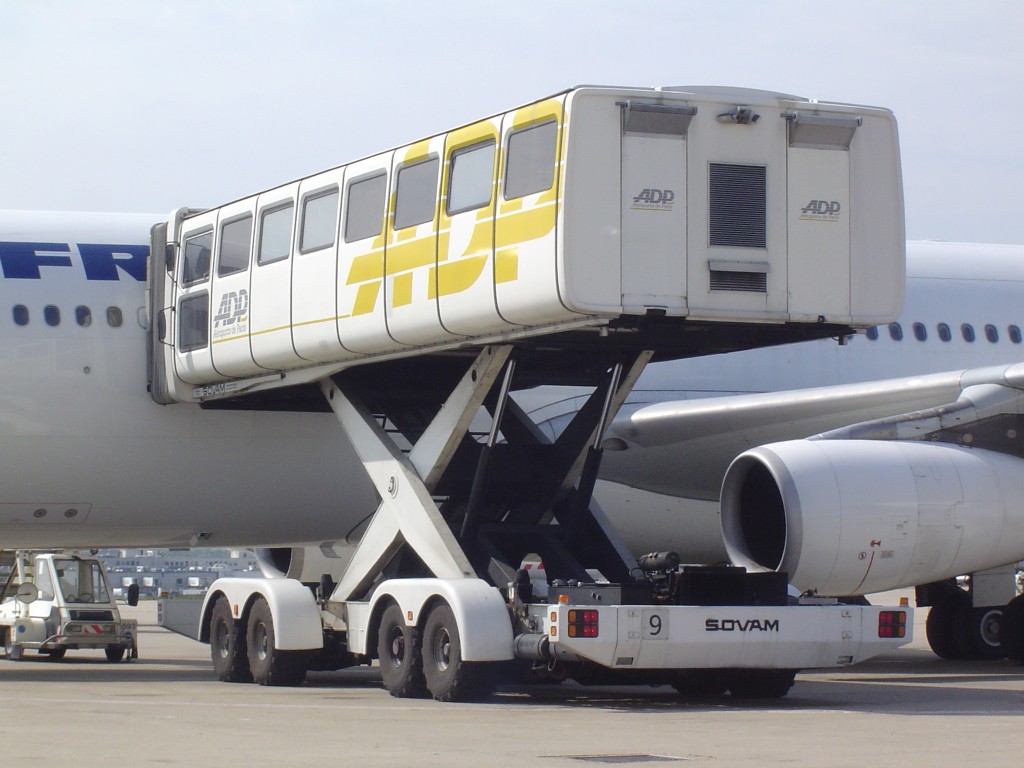
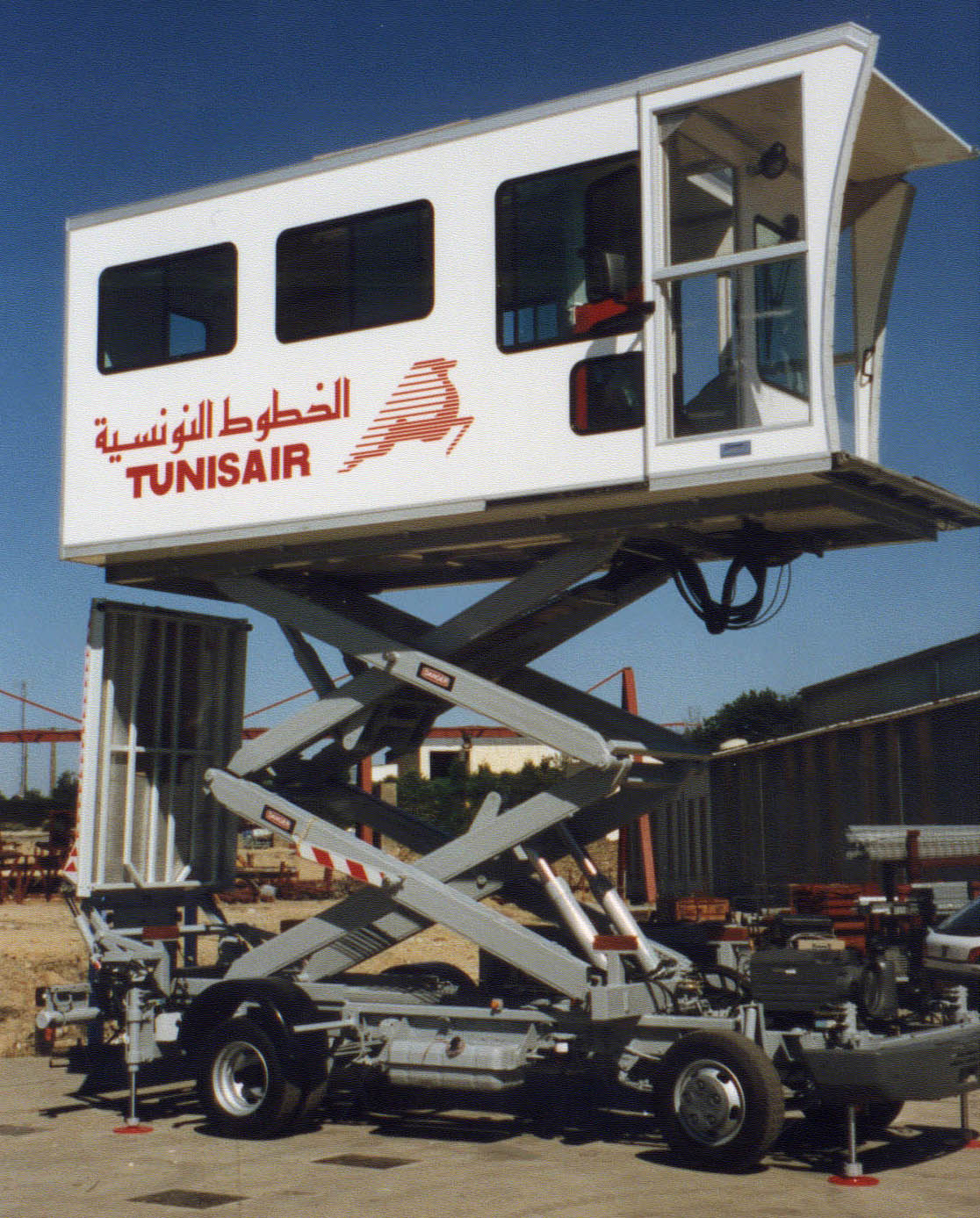
1980–2000: The diesel-powered Ambulift
The next generation transformed the cab into a vehicle designed specifically for people with reduced mobility. It featured an enclosed body, a boarding platform, a rear tailgate, and secure access.
These Ambulifts were manufactured in Parthenay and exported, notably to ground handling services in North Africa, including Tunisair. Production lasted twenty years. Each series improved upon the previous one.
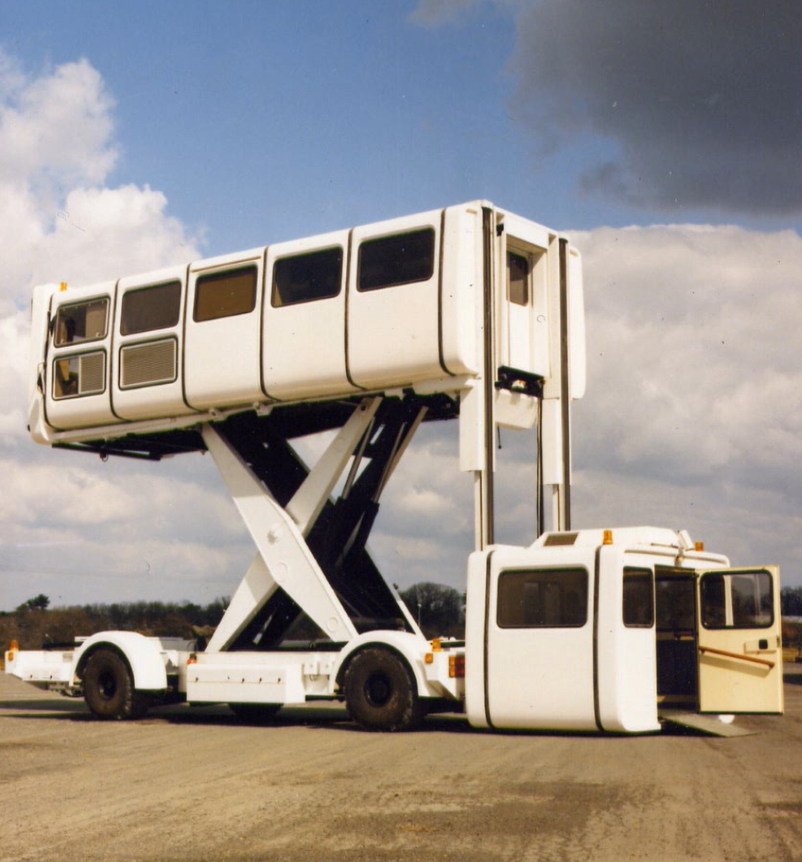
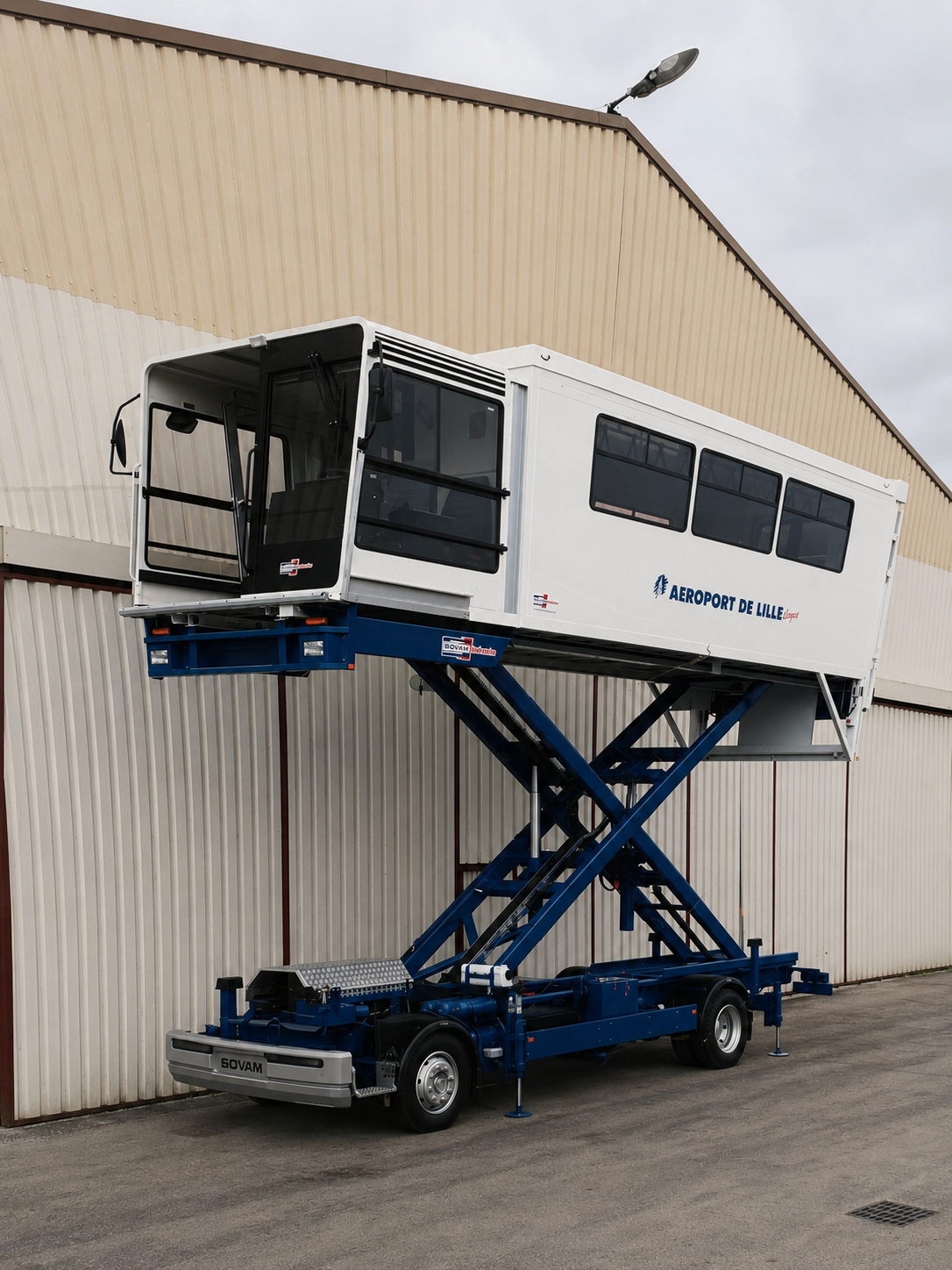
2000–2010: A redesigned cabin for improved visibility
The 2000s generation puts the operator and the passenger at the heart of the design. Larger windows. A more intuitive driver’s console. A wider boarding platform.
One of these ambulifts for people with reduced mobility was delivered to Lille Airport. The eHELP is based on this design.
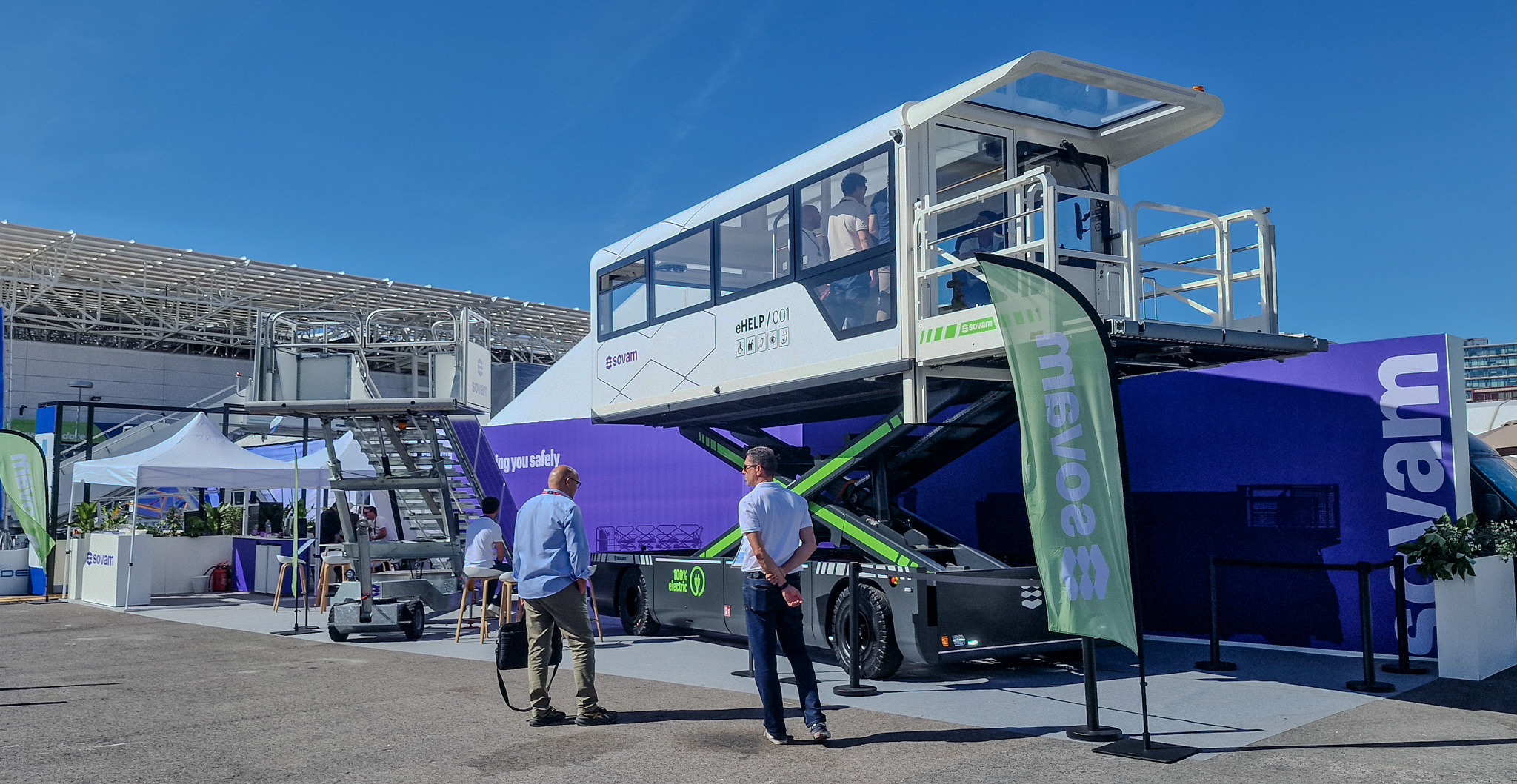
2026: eHELP—same architecture, now 100% electric
The eHELP retains what makes an Ambulift valuable: precise docking, secure load handling, and durability. What’s changing is the power source.
- Zero emissions on the tarmac
- 6 to 8 passengers per trip
- Cab lift up to 6 m, for medium- and heavy-duty trucks
- Glass-enclosed cab on hydraulic suspension
- Joystick controls and 360° camera
- Contactless boarding compliant with IATA 2020
The result: a quieter, cleaner, and more relaxed boarding experience for every passenger. And a tool that operators can rely on day after day.
2026: eHELP, same architecture, now 100% electric
The eHELP retains what makes an Ambulift valuable: precise docking, secure load handling, and durability. What’s changed is the power source.
- Zero emissions on the tarmac
- 6 to 8 passengers per trip
- Cabin lift height up to 6 m, for medium and large aircraft
- Glass cabin on hydraulic suspension
- Joystick control and 360° camera
- Contactless approach compliant with IATA 2020
The result: a quieter, cleaner, and more relaxed boarding experience for every passenger. And a tool that operators can rely on day after day.
Four generations, one architecture
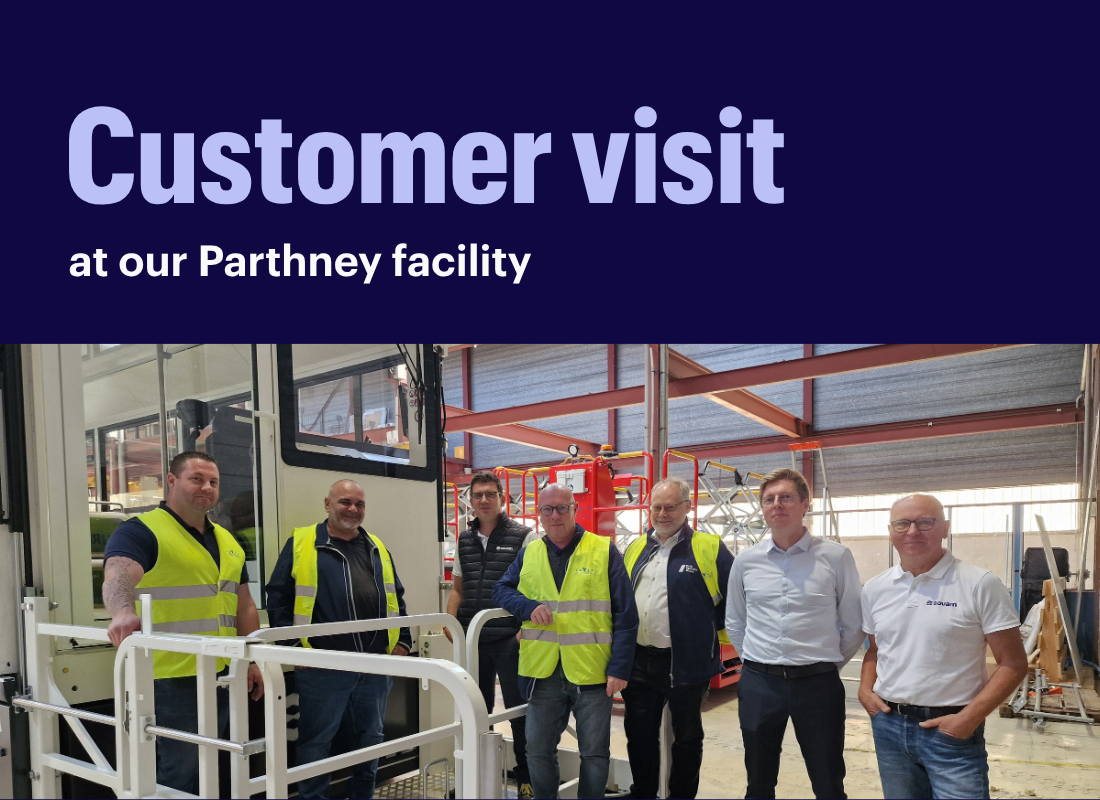
From the AEROBUS to the eHELP, the method has remained the same. Design, assembly, and testing are carried out in Parthenay. The teams that manufacture the eHELP draw on decades of field feedback, both in France and internationally.
SOVAM also provides long-term support for its equipment through its after-sales service and refurbishment programs. An Ambulift is a long-term investment. We treat it as such.
Let’s talk about your project
Are you upgrading your PMR fleet or switching to electric runway equipment? Our team will help you design the right solution for your airport.
Contact: contact@sovam.fr · +33 (0)5 49 95 14 44